Case Study 4

Simplified Strategy, Scaled Success: 75% Growth

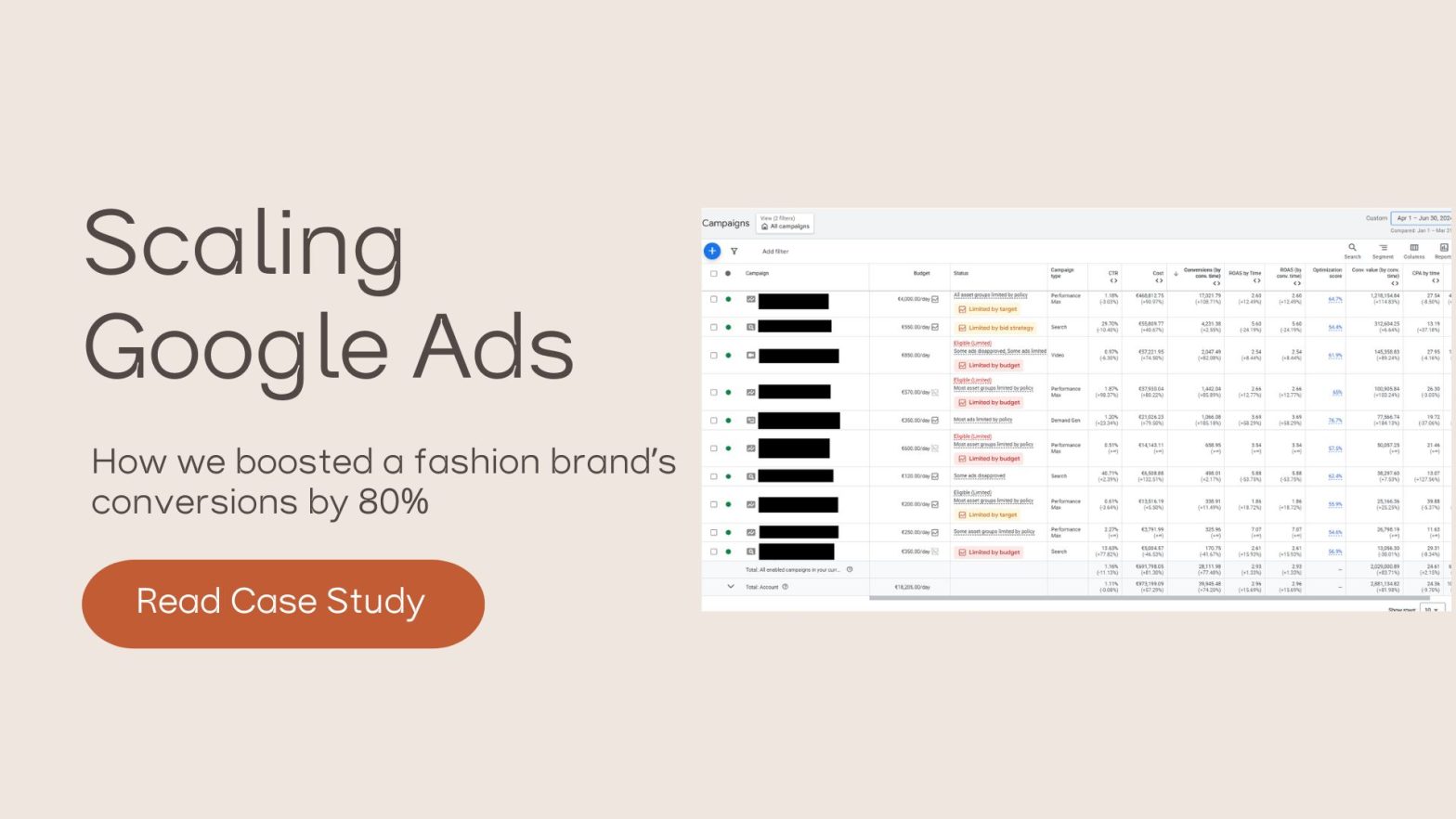
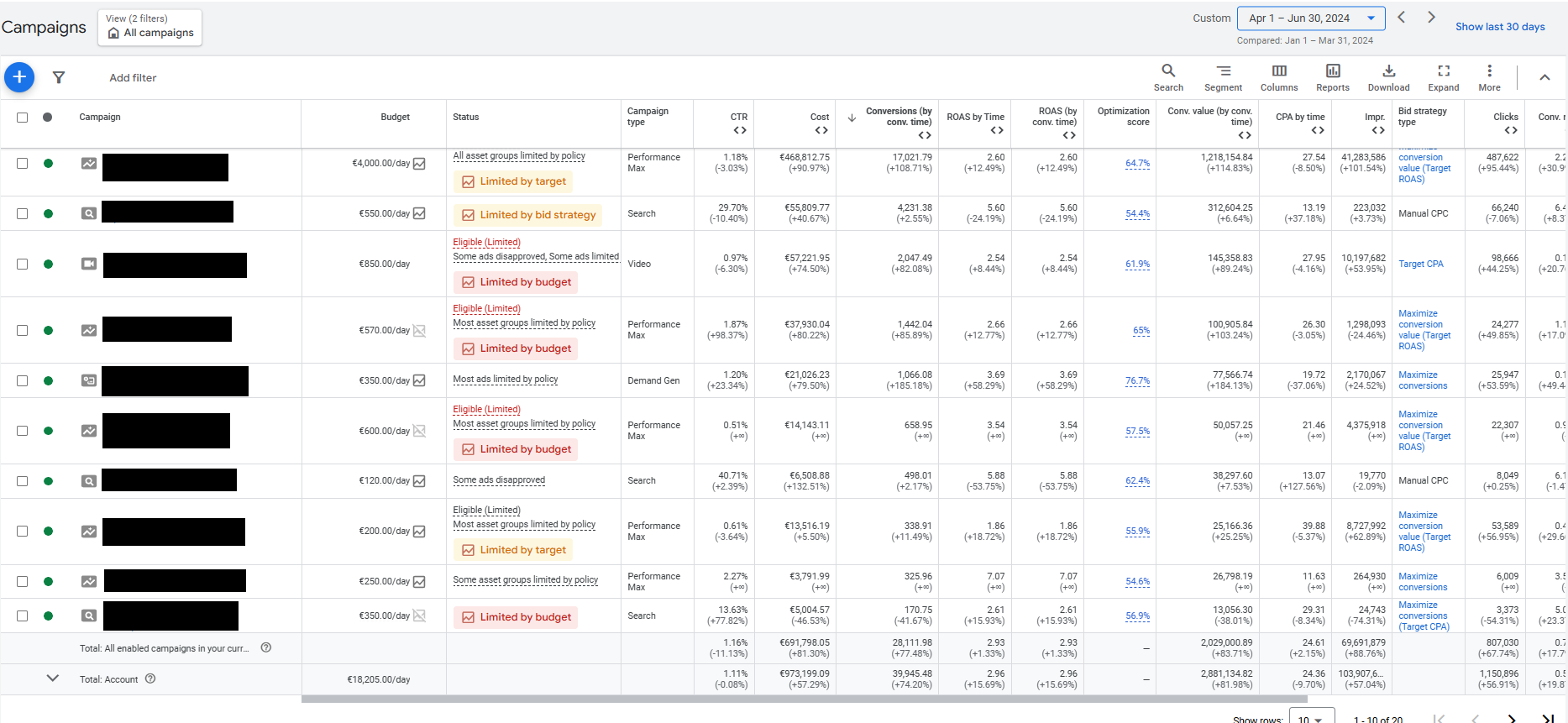
Our strategy centered on three levers: restructuring Performance Max to isolate best-sellers and high-potential SKUs, rebuilding YouTube with scroll-stopping creative, and improving product titles to increase search visibility.

At the time, the account was organized with a “campaign per category” setup. The problem: even within a single category, products had very different AOVs, conversion rates, and NC-ROAS. So budgets were being spread too evenly and opportunities were getting buried. We decided to segment much more aggressively.

To guide the rebuild, we created a deep-dive report that combined on-site and paid social signals. We analyzed landing page conversion rates and key Facebook metrics by product line—hook rate, unique outbound CTR, and conversion rate—then cross-referenced those findings with Google Ads performance. This allowed us to identify “hidden potential” products and restructure campaigns so more budget flowed to the SKUs with the strongest upside.

On the creative side, we repurposed proven Facebook winners into YouTube ads, using short, attention-grabbing videos to drive top-of-funnel interest. YouTube became a demand-generation engine that fed Performance Max with engaged users, giving PMAX higher-quality signals and larger pools to retarget.

With tighter segmentation, smarter budget allocation, and a YouTube-to-PMAX pipeline in place, we scaled the account to nearly $1M/month in spend within three months.


Results

👉🏼 Conversions: Up 74%
👉🏼 Account Spent: Up 57%
👉🏼 CPA by Time: Down 9%


Case Study 3

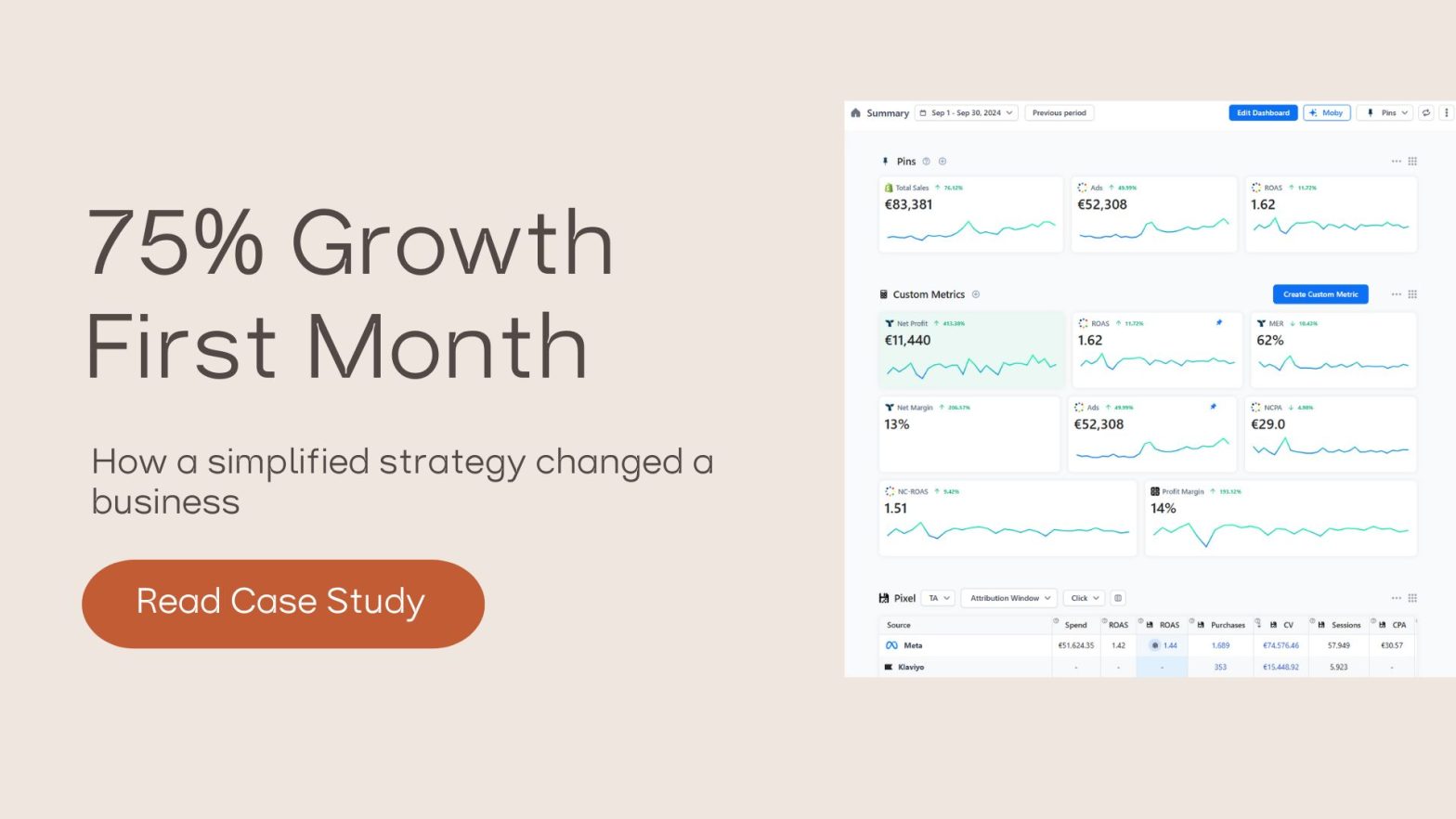
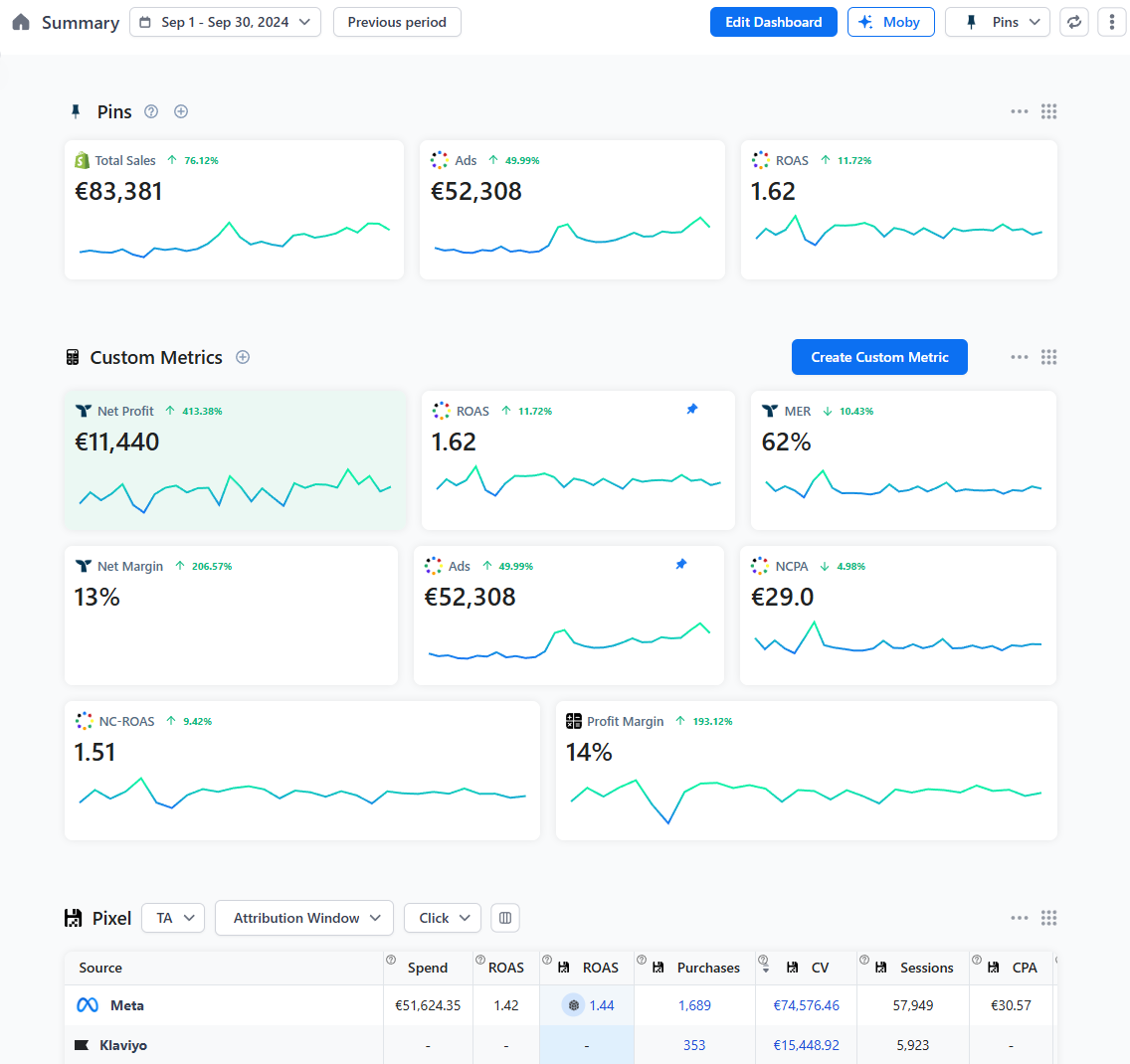
Simplified Strategy, Scaled Success: 75% Growth

This case study highlights how we helped a health and wellness brand scale their ad account by 50% month-over-month while maintaining their new customer ROAS.

When we first joined, the Meta ads account was fragmented. One traffic campaign here, an awareness campaign there, and multiple campaigns running similar creatives. That setup caused the account to compete with itself, with campaigns overlapping audiences and driving the new-visitor share on sales campaigns down to around 50%.

We streamlined the structure, kept only the top performers based on NC-ROAS and new-visitor acquisition, and rebuilt around those winners. As a result, campaigns learned faster and we were able to shift more budget toward new customer acquisition. From there, we tested new angles for the strongest personas and core desires. This month, that foundation let us scale aggressively. Spending 50% more while increasing revenue by 75%.


Results

👉🏼 Total Sales: Up 76%
👉🏼 Monthly Budget: Up 50%
👉🏼 NC-CPA Down 5%


Case Study 2

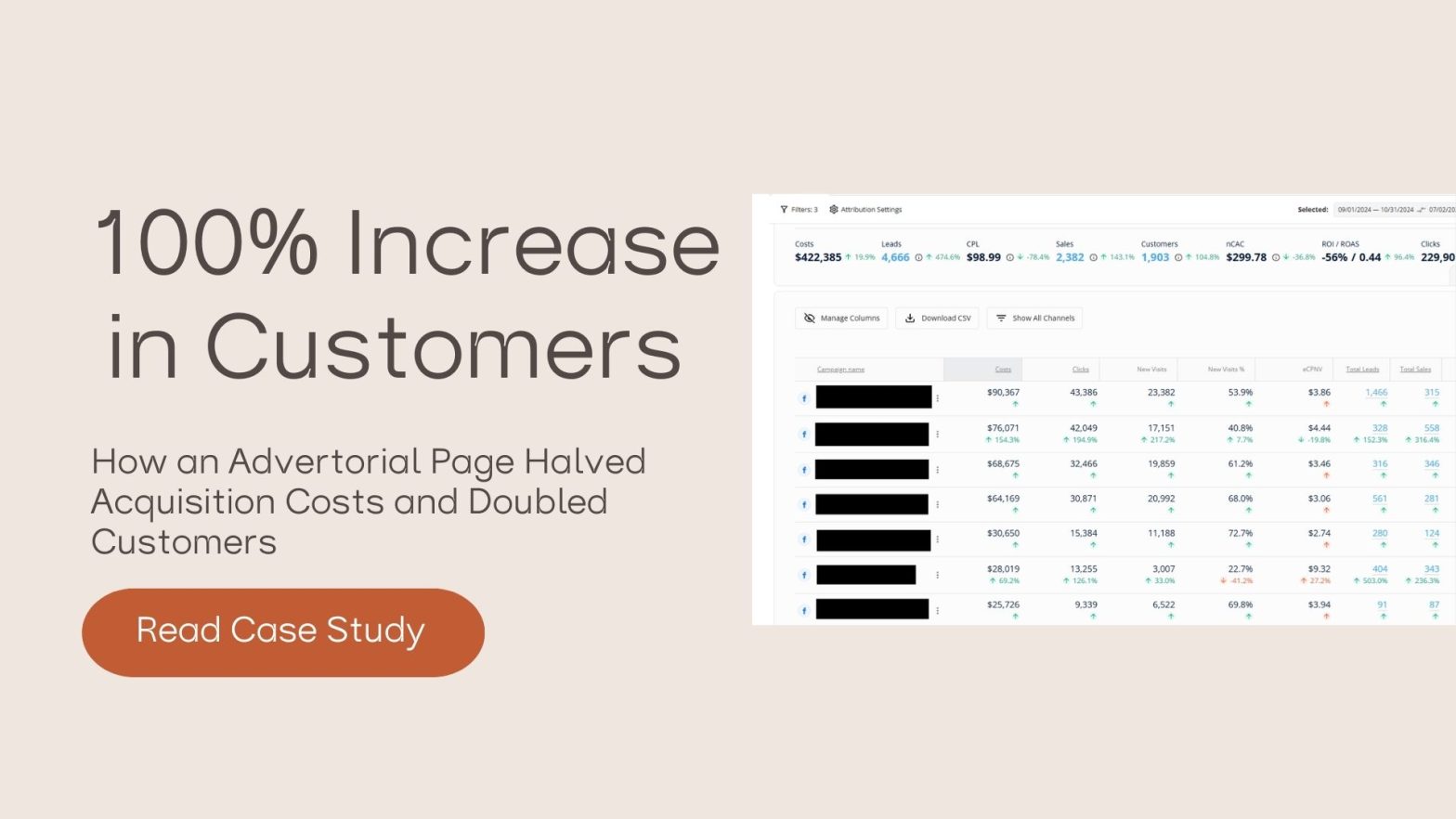
How an Advertorial Page Halved Acquisition Costs and Doubled Customers

In this case study, we showcase how a shift from traditional product pages to an engaging advertorial landing page transformed the performance of a pet products brand.

Designed to inform rather than hard-sell, the page featured bundle offers, testimonials, FAQs, and all essential information to build trust and address doubts.

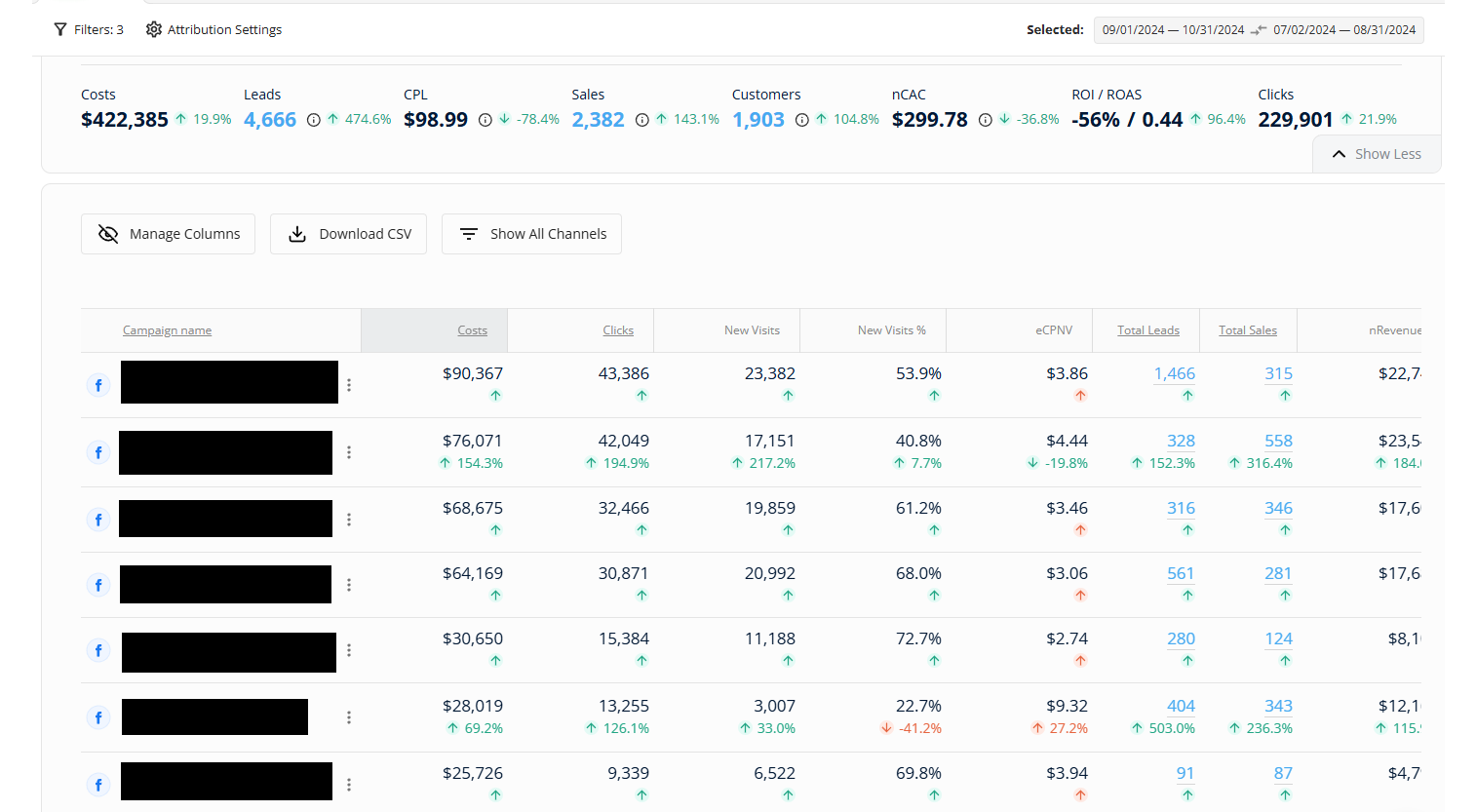
This strategy led to a significant increase in conversion rates, a 37% reduction in cost per new customer, and a doubling of customers with only a 20% budget increase.


Results

👉🏼 Ad Spend: Up 20%
👉🏼 Customers: Up 104%
👉🏼 Cost Per Lead: Down 78%


Case Study 1

How we scaled a furniture brand from $1M/month to $2M/month

This case study is a clear example of why one-size-fits-all scaling doesn’t work.

We’ve partnered with this brand for over two years, and going into 2025 we set an aggressive growth target: increase revenue by 60% starting in January 2025. At the time, the account followed a classic testing + scaling framework. It worked well—until we pushed spend hard. As we ramped, the core scaling campaign couldn’t handle the “stress test,” and performance started to become unstable.

To unlock consistent scale, we shifted to a multi-campaign strategy. Instead of relying on a single hero campaign, we launched multiple campaigns targeting the same persona and angle, but using different creative formats. This let us build a more resilient structure while also delivering varied creative across different touchpoints in the customer journey.

To prevent campaigns from competing with each other, we used exclusions heavily, minimizing audience overlap and protecting new-visitor acquisition.

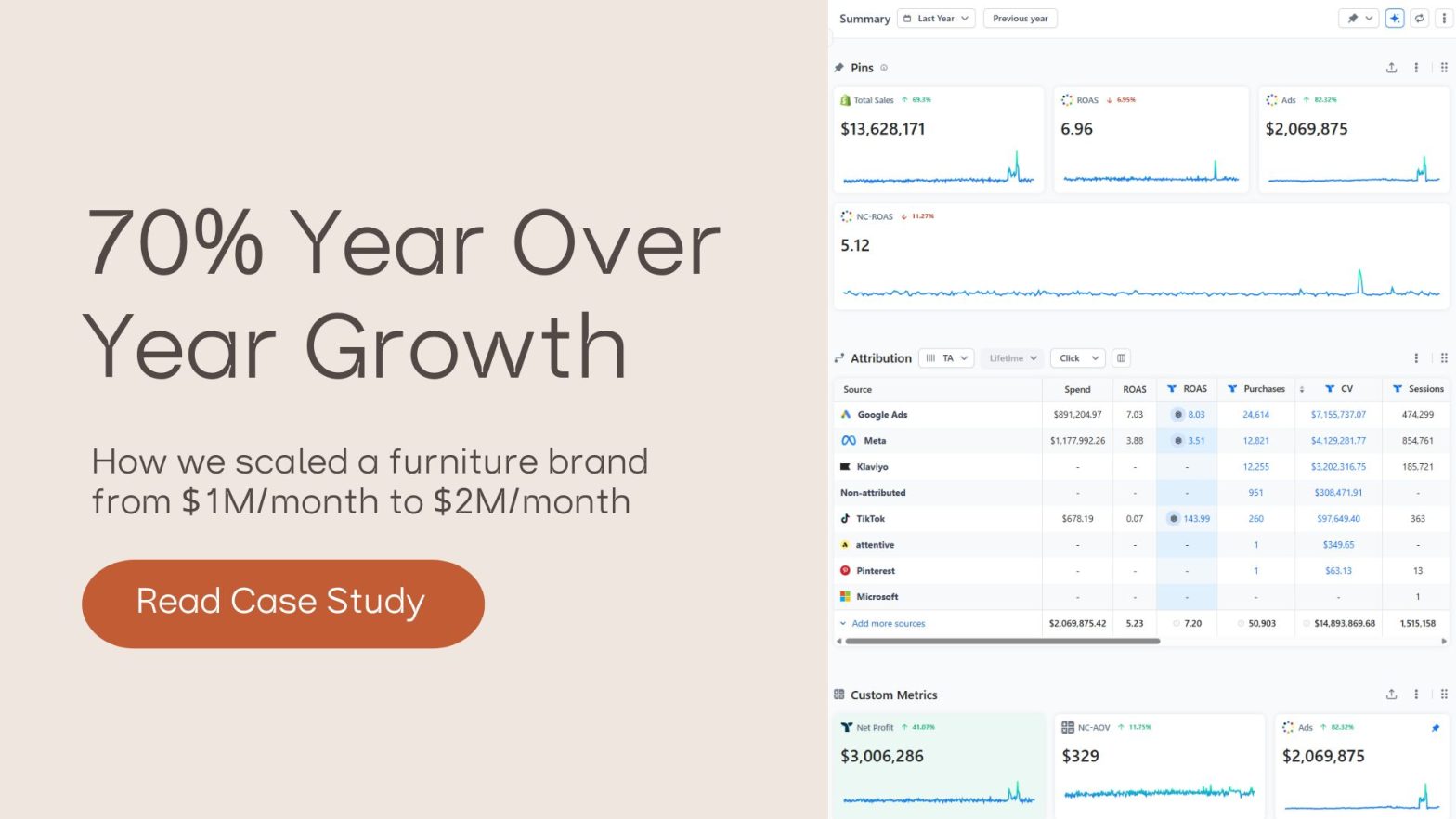
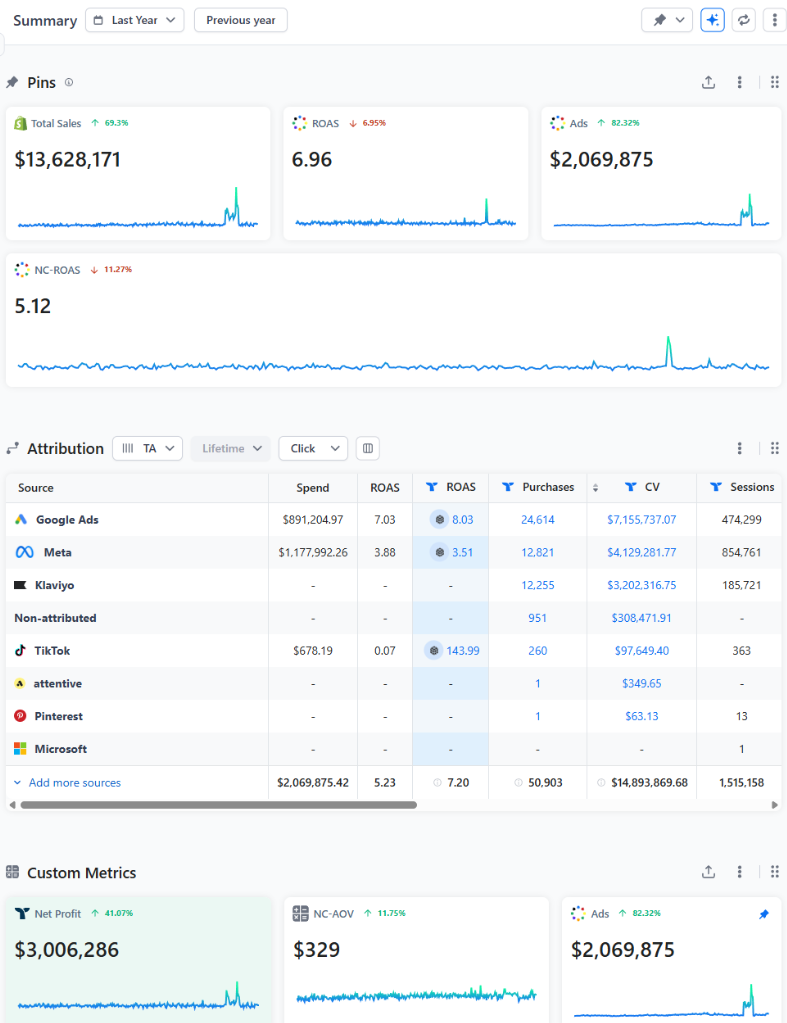
The result: total sales grew by 70% while maintaining strong efficiency. While overall NC-ROAS decreased by 10% to 5.12x, it remained comfortably above the 4.5x target. So we were able to scale aggressively without compromising profitability.


Results

👉🏼 Total Sales: Up 70%
👉🏼 Total Spent: Up 82%
👉🏼 Net Profit: Up 41%